
A Nashville vacation with family works best when each day pairs one major music attraction with a relaxed activity. Parks, animals, and hands-on exhibits give children a break between museums and performances.
Downtown museums introduce Nashville’s music history through recordings, costumes, instruments, and interactive displays. Meanwhile, the zoo, science center, and Centennial Park give younger children room to move.
Families will find driving or ride-hailing useful because several major attractions sit outside downtown. Preschoolers can enjoy the city, but children ages six and older may understand more of the museums and live shows.
Three or four days allows enough time for a first visit without filling every morning and afternoon. Broadway becomes loud, crowded, and adult-oriented after dark. See its neon signs during the day, then spend family evenings elsewhere.
Quick Facts for a Nashville Vacation With Family
- Best time to go: Spring and fall usually provide comfortable sightseeing weather, although popular weekends can get busy.
- Ideal trip length: Plan three to four days. Add a fifth day for slower mornings, Cheekwood, or the zoo.
- Best ages: Children ages six through the teen years gain the most from the music museums. Toddlers and preschoolers still have good options.
- Budget level: $$, with higher costs for downtown hotels, major performances, parking, and several ticketed attractions.
Summer brings heat and humidity, so plan midday museum visits and hotel-pool breaks. Winter can cost less outside holidays and major events. However, cold rain may limit park time, so check seasonal schedules before booking.
How to Plan Your Nashville Days
Group attractions by neighborhood instead of crossing the city several times. Weekday traffic can make even short drives take longer than expected.
Downtown includes the Country Music Hall of Fame and Museum and the National Museum of African American Music. You will also find the Frist Art Museum and Broadway’s honky-tonk district nearby.
Centennial Park and the Parthenon sit west of downtown. The Nashville Zoo and Adventure Science Center lie south of the main tourist area.
The Grand Ole Opry is northeast of downtown, while Cheekwood Estate & Gardens is southwest. Do not treat them as quick additions to the same afternoon.
Reserve the attractions and performances your family values most. Then leave at least one open block for bad weather, traffic, or tired children.
Concert schedules, museum programs, admission rules, and operating hours change throughout the year. Verify details on each attraction’s official website shortly before your visit.
Best Music Attractions for Families
Country Music Hall of Fame and Museum
The Country Music Hall of Fame and Museum explores country music through instruments, costumes, recordings, vehicles, photographs, and personal stories. Elementary-age children, tweens, and teens will likely connect most with the exhibits.
Allow two to three hours. Preschoolers may move through faster, while music-focused teens may want more time.
Admission represents a moderate family expense, and special tours may cost extra. Reserve ahead during school breaks or major Nashville event weekends.
The downtown location makes the museum easy to pair with lunch or a daytime Broadway walk. Check the calendar for current family programs before choosing your date.
National Museum of African American Music
The National Museum of African American Music examines gospel, blues, jazz, R&B, hip-hop, and related traditions. Multimedia exhibits show how African American artists shaped music across the United States.
Older elementary students, tweens, and teens usually get the most from the interactive format. Plan about two hours, or longer for children who want to try every listening station.
Admission costs a moderate amount, and advance booking can help on busy downtown days. Review current visitor information because timed-entry practices and interactive features may change.
This museum broadens a music-focused itinerary beyond country music. It also helps children understand how American musical styles overlap and influence one another.
Grand Ole Opry
A Grand Ole Opry performance lets children hear several artists and musical styles during one structured show. It works best for school-age children and teens who can sit through an evening performance.
Set aside most of the evening for travel, parking, entry, and the show. Tickets rank among the more expensive items on a family itinerary, and prices vary by date and seat.
Check the official schedule before booking because lineups change and performers may be substituted. Choose an earlier show when available, eat beforehand, and bring hearing protection for sound-sensitive children.
A Daytime Walk on Broadway
Lower Broadway contains music venues, shops, restaurants, bright signs, and heavy foot traffic. It is a district rather than a single child-focused attraction.
Visit in the morning or early afternoon. Families can hear live music and see the signs before evening crowds fill the sidewalks.
Broadway generally suits school-age children and teens better than toddlers. Music from open venues can be loud, and crowded sidewalks make stroller use difficult.
Plan 30 to 60 minutes unless you stop for food or enter a venue. Walking is free, but parking, meals, and entertainment can add up quickly.
Each venue sets its own age rules and operating hours. Check current policies rather than assuming a restaurant or music venue admits children.
Hands-On Museums, Animals, and Outdoor Breaks
Adventure Science Center
Adventure Science Center offers hands-on exhibits about the human body, physics, space, and other scientific topics. It is strongest for children ages three through twelve, although younger teens may enjoy selected areas.
Allow about three hours. Children who repeat interactive stations or attend a planetarium program may need half a day.
Admission costs a moderate amount, and some shows or experiences may require separate tickets. Check the official website for current exhibits and planetarium schedules.
The center sits south of downtown. Driving or using a ride-hailing service usually works better than adding it to a downtown walking day.
Arrive near opening on weekends and rainy days. Indoor attractions often become crowded when outdoor plans fall through.
Nashville Zoo
Nashville Zoo gives toddlers and younger school-age children a welcome break from music museums. Families can explore animal habitats, walking paths, and play areas.
Teens interested in wildlife photography or animal care may also enjoy the visit. Everyone should prepare for substantial walking.
Plan three to five hours, depending on the weather and time spent in play areas. Admission, parking, and optional activities make this a moderate-to-higher-cost outing.
Bring a stroller for younger children, refillable water bottles, hats, and sunscreen. Start early during warm weather because much of the visit takes place outdoors.
Follow barriers and staff instructions around animals. Before visiting, confirm current exhibits, feeding rules, and activity availability.
Centennial Park and the Parthenon
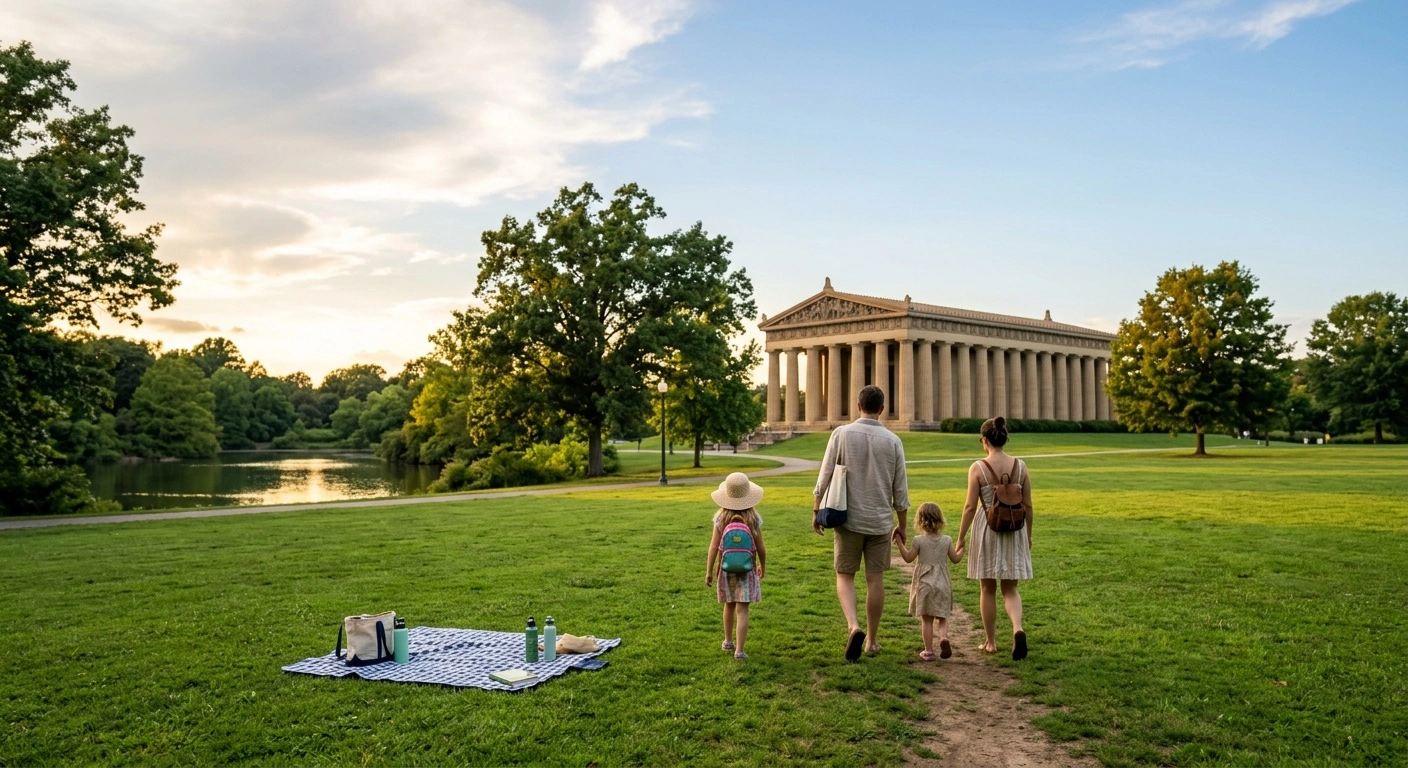
Centennial Park has open lawns, walking paths, a small lake, and room for children to decompress. Its centerpiece is a full-scale replica of the Parthenon.
Inside, the Parthenon contains an art museum and a large statue of Athena. The park suits all ages, while the museum may interest school-age children and teens most.
Allow one to two hours for the park and museum. Stay longer if you bring a picnic or give young children time to run.
The park is free, but the Parthenon museum charges a relatively modest admission fee. Visit in the morning during hot weather and check the current museum schedule.
Keep children away from unfamiliar wildlife near the lake. Do not feed animals unless posted rules specifically allow it.
Tennessee State Museum and Bicentennial Capitol Mall State Park
The Tennessee State Museum covers the state’s natural and cultural history through artifacts and interpretive displays. It works best for school-age children and teens, especially those studying Tennessee history or the Civil War.
Younger visitors may tire of the reading-heavy sections. Plan about 90 minutes to two hours inside the museum.
General admission has historically been free, but confirm current policies and special-exhibit fees. Afterward, walk through adjacent Bicentennial Capitol Mall State Park.
The park’s paths and large geographic features give restless children space to move. This lower-cost combination also pairs well with lunch at the nearby Nashville Farmers’ Market.
Cheekwood Estate & Gardens
Cheekwood combines gardens, wooded paths, art, and a historic estate outside downtown. It provides a quieter alternative to the city’s busy music district.
The grounds suit all ages. Toddlers may show more interest in outdoor paths than in the house interiors or art collection.
Allow two to four hours. Admission costs a moderate amount and may increase during seasonal events.
Wear comfortable shoes because the property covers a broad area. Families with young children may want a stroller that handles outdoor paths.
Cheekwood sits southwest of downtown and is easiest to reach by car or ride-hailing service. Book popular seasonal displays early and review current access restrictions before visiting.
Where to Stay in Nashville With Kids
Downtown works well for families prioritizing music museums, the Frist, and a daytime Broadway visit. However, rooms, parking, and meals often cost more in this area.
Street noise and nightlife can also make downtown less comfortable for families after dark. Request a higher-floor room away from entertainment streets if sleep is a concern.
Before booking, ask whether the hotel charges extra for parking, breakfast, refrigerators, or cribs. Do not assume these amenities come with the room rate.
Midtown and West End offer easier access to Centennial Park, restaurants, and Vanderbilt-area services. Both areas remain a short drive from downtown.
Families attending the Grand Ole Opry may prefer the Opryland area. Parking can be easier, and the nighttime atmosphere feels removed from Broadway.
Opryland is not walkable to central Nashville. Confirm that any advertised hotel shuttle serves the places on your itinerary.
For longer stays, consider a suite or rental with a kitchen and separate sleeping area. Extra space makes breakfast, naps, and early bedtimes easier.
If a pool matters, verify that it will open during your travel dates. Hotel photos and older listings may not reflect seasonal closures or maintenance.
Getting Around Nashville With Children
A car helps when visiting the zoo, Cheekwood, the Grand Ole Opry, and other outlying attractions. Downtown parking can be expensive, though.
Compare hotel parking charges with ride-hailing costs before deciding whether to rent a car. A mixed approach may cost less than parking downtown every day.
Nashville International Airport usually sits a short drive from downtown. Rush hour, concerts, and major events can lengthen that trip considerably.
Public buses serve the city, but routes and wait times may not suit a short family trip. Naps, strollers, and timed tickets can make transit connections harder to manage.
Downtown sidewalks generally accommodate strollers. Still, crowds, construction, hills, and loud streets can make walks tiring.
A compact stroller fits more easily inside museums and crowded restaurants. It also takes up less space in ride-hailing vehicles.
Families using taxis or ride-hailing services must arrange suitable child restraints. Availability is not guaranteed.
Bring your own car seats or book a service that explicitly confirms them. Review current Tennessee child-passenger laws before traveling.
Where to Eat With Kids
Casual food halls, barbecue counters, meat-and-three cafeterias, and breakfast shops often work well for families. They usually offer faster service and more flexible seating than crowded live-music venues.
The Nashville Farmers’ Market helps when family members want different meals. Vendor hours and seating availability vary, so check the schedule first.
Hot chicken is a local specialty, but standard spice levels can overwhelm children and many adults. Ask for plain or mild chicken instead of trusting the lowest listed heat level.
Broadway restaurants often have long waits and loud dining rooms, especially at dinner. An early meal outside the busiest blocks can save money and patience.
Pack a small snack on museum days. Tickets, parking, and restaurant waits can create long gaps between meals.
Before visiting a live-music restaurant, confirm age restrictions, cover charges, performance times, and reservation policies. Rules can change between daytime and evening service.
Rainy-Day and Hot-Weather Plans
The Country Music Hall of Fame and National Museum of African American Music provide dependable indoor options. The Tennessee State Museum, Frist Art Museum, and Adventure Science Center also work well.
Wet days draw other families indoors, so do not expect empty galleries. Reserve timed tickets when available and allow extra time for parking.
The Frist can serve as a shorter stop for art-focused families. Exhibitions and hands-on programs change, so review the schedule before promising a specific activity.
During summer, visit the zoo, Cheekwood, or Centennial Park early. Move indoors around midday when heat and humidity peak.
Carry water, apply sunscreen, and watch for signs of overheating. Young children may need more frequent breaks than they do at home.
Thunderstorms can develop quickly. Leave open parks and exposed areas when lightning approaches.
A hotel pool can fill a weather gap, but confirm its hours first. Supervise children closely, and never treat flotation toys as substitutes for attentive adults.
A Realistic Four-Day Nashville Family Itinerary
This schedule limits most days to one major attraction and one lighter activity. It works best for elementary-age children and teens.
Families with toddlers can shorten museum visits and add hotel downtime. Resist filling every free hour.
Reserve the Grand Ole Opry and timed museum entries before completing the itinerary. Keep outdoor days flexible if forecasts call for heavy rain or extreme heat.
Traffic, concerts, and sporting events can change travel times substantially. Check operating hours before leaving the hotel each morning.
| Day | Morning | Afternoon | Evening |
|---|---|---|---|
| Day 1: Downtown music | Visit the Country Music Hall of Fame and Museum. | Have lunch, rest at the hotel, and take a short daytime Broadway walk. | Choose an early dinner away from the busiest blocks. |
| Day 2: Science and park time | Explore Adventure Science Center. | Return to the hotel for downtime or a pool break. | Visit Centennial Park and eat an early meal near West End. |
| Day 3: Animals and live music | Arrive at Nashville Zoo near opening. | Have lunch and take a substantial hotel break. | Attend the Grand Ole Opry if your children can manage a full evening show. |
| Day 4: History or gardens | Choose the Tennessee State Museum and Bicentennial Capitol Mall, or visit Cheekwood. | Have a relaxed lunch and add one missed attraction if everyone has energy. | Eat a casual dinner and pack. |
What to Book Before Your Family Trip
Book the Grand Ole Opry first if the performance anchors your trip. Its date and available seats will shape the rest of your schedule.
Next, reserve a room with the sleeping arrangements and facilities your family needs. Confirm parking, kitchen access, cribs, and pool availability in writing.
Check whether museums require timed entry during spring break, summer weekends, or holidays. Popular time slots may sell out even when general admission remains available.
Families flying into Nashville should plan ground transportation before departure. Decide whether to rent a car, bring car seats, or arrange a suitable transportation service.
Review the forecast about a week before the trip. Move outdoor attractions to the coolest and driest periods when possible.
Leave one half-day uncommitted. A slow morning or extra swim often improves a Nashville vacation with family more than one additional museum visit.