A Las Vegas vacation with family works best when the Strip is only one part of the trip. Children often enjoy the fountains, conservatory displays, observation wheel, aquariums, and oversized architecture. However, long walks through smoky casinos can wear families down. Balance Strip sightseeing with a children’s museum, a desert outing, pool time, and early nights.
Las Vegas is easiest with elementary-age children and teens who can manage substantial walking. Toddlers can still enjoy pools and indoor attractions. However, strollers, naps, heat, and casino routes require more planning. Resort fees, parking, meals, and attraction tickets also raise the final cost well above the advertised room rate.
Most importantly, Las Vegas is not a theme park. Minors may follow designated casino routes with an adult, but they cannot linger on gaming floors. Some resorts, pools, shows, lounges, and entertainment districts also restrict children. Check current policies before booking because age rules, schedules, and access can change.
Quick Facts for a Las Vegas Vacation with Family
Spring and fall usually offer the most comfortable walking weather. However, weekends and school breaks can draw large crowds. Summer room deals may look attractive, but daytime heat can make outdoor sightseeing dangerous, especially with toddlers. Winter brings cooler temperatures and occasional cold winds, though most major indoor attractions remain open.
Three or four nights allow time for the Strip, an indoor attraction, and a half-day beyond the casinos. Stay longer if you want to add Red Rock Canyon, Hoover Dam, or extra pool time. Leave at least one unscheduled block each day. Resorts sit much farther apart than they appear.
- Best time to go: March through April and October through November for generally comfortable outdoor weather
- Ideal trip length: Three to four nights
- Best ages: School-age children and teens; toddlers can manage with plans built around naps and heat
- Budget level: $$ to $$$ after adding resort fees, food, transportation, and attraction tickets
- Transportation: Walking, rideshares, taxis, the Las Vegas Monorail, buses, or a rental car for off-Strip trips
Best Family-Friendly Las Vegas Attractions
A practical family itinerary alternates free sights with one or two paid attractions. Do not try to tour every resort. Allow extra time for pedestrian bridges, elevators, security lines, and large casino corridors. Construction or closed escalators can make a nearby destination surprisingly difficult to reach.
Many Strip attractions draw their largest crowds after dinner. Museums and outdoor destinations usually work better in the morning. Advance tickets help with popular timed attractions, but avoid booking reservations too close together. Before leaving your hotel, confirm hours, age policies, ticket rules, and show schedules on official websites.
Bellagio Conservatory and Fountain Shows
The Bellagio Conservatory displays flowers, plants, sculptures, and seasonal installations beneath a glass roof. It suits all ages, although toddlers may focus more on colors than details. Teens interested in photography often enjoy the elaborate displays. Admission is generally free, and most visits take 30 to 45 minutes.
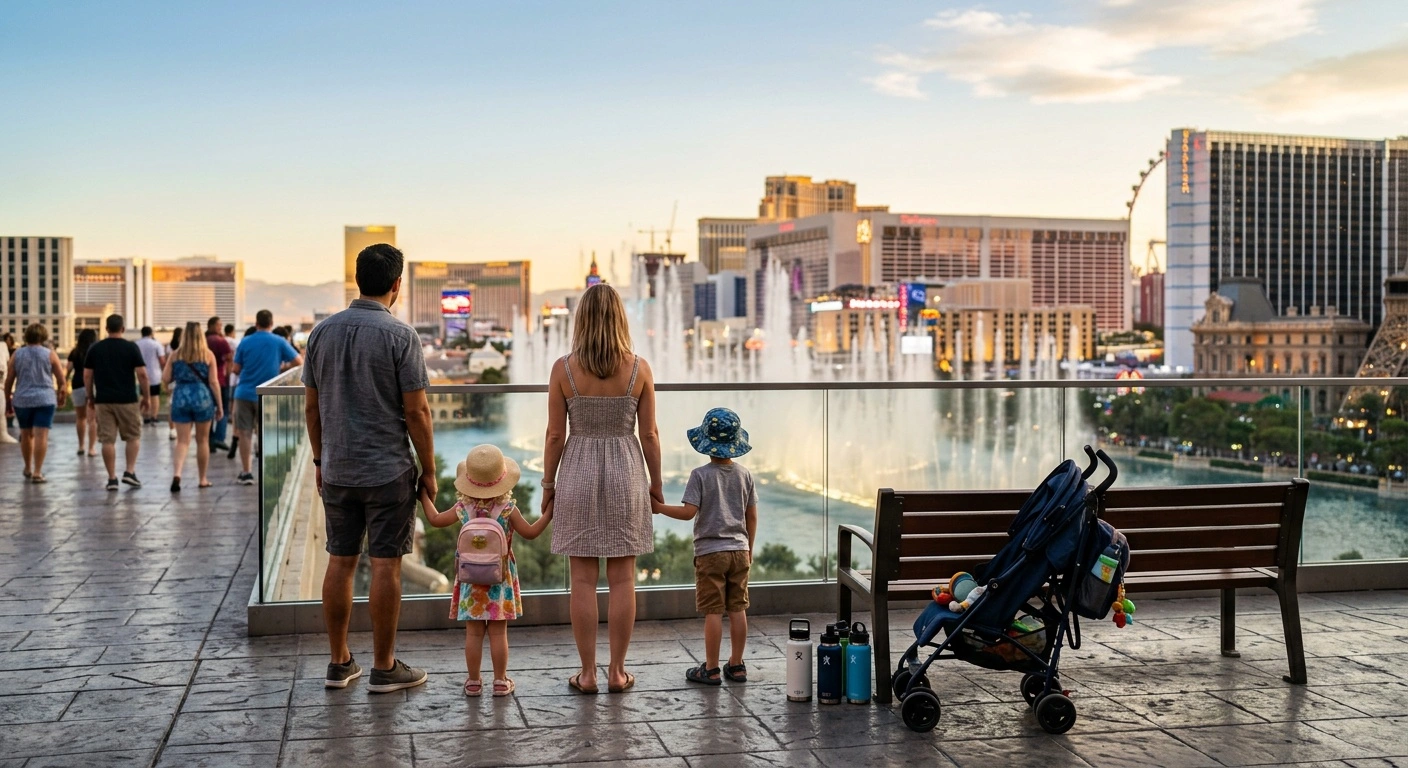
Outside, the Bellagio fountains present choreographed water shows on the lake. Schedules vary with the day, season, weather, and special events. Watching is free, but evening railing space fills quickly. Visit the conservatory in the morning, then return after an early dinner and verify the fountain schedule first.
High Roller Observation Wheel
The High Roller at the LINQ Promenade carries families above the city in enclosed cabins. One rotation takes about 30 minutes. Allow roughly an hour for ticketing, security, boarding, and restroom stops. Children who dislike heights or enclosed spaces may not enjoy the ride.
Tickets range from moderately priced to expensive, depending on timing and ticket type. Evening rides provide brighter city views, while daytime rides often work better around naps and early bedtimes. Book ahead for busy weekends. Also check current stroller rules, child ticket prices, and age limits at nearby venues.
Shark Reef Aquarium at Mandalay Bay
Shark Reef Aquarium features sharks, rays, fish, reptiles, and other animals in an indoor setting. It provides a useful break from the heat. The aquarium particularly suits toddlers and elementary-age children, though older marine-life fans may also enjoy it. Most families spend 60 to 90 minutes inside.
Admission can feel expensive for a relatively short visit, so consider your children’s interest before booking. The aquarium sits deep inside a large resort complex. Reaching it may require more walking than the map suggests. Reserve a time on busy weekends and use the restroom before entering.
Discovery Children’s Museum
Discovery Children’s Museum gives toddlers, preschoolers, and elementary-age children room for hands-on play. Exhibits cover science, creativity, problem-solving, imaginative play, and physical activity. Plan two to four hours, depending on your children’s ages and the crowd level.
Moderate admission prices make the museum practical for a half-day visit. It sits north of the main resort corridor, so most families use a taxi, rideshare, or car. Arrive near opening and confirm current hours before leaving. Review the museum’s visitor guidance for socks or other required items.
Springs Preserve
Springs Preserve combines local history, desert ecology, gardens, trails, and museum exhibits outside the casino corridor. It works well for preschoolers through teens. Children interested in animals, trains, plants, or desert life may want several hours. Handle outdoor sections early during warm weather.
Families can spend three to five hours here. Admission usually falls in the moderate range, although seasonal events may cost extra. Some features follow limited schedules, so review the official calendar before choosing a date. Bring water bottles, hats, sunscreen, and a stroller for younger children.
The Neon Museum
The Neon Museum preserves historic Las Vegas signs in an outdoor collection known as the Neon Boneyard. School-age children and teens can better appreciate the design, local history, and stories behind the signs. Younger children may lose interest during a guided tour or a hot daytime visit.
Allow 60 to 90 minutes and expect moderate ticket prices. Evening visits create a different atmosphere, but they often sell out and may run late. Reserve ahead and wear closed-toe walking shoes. Confirm tour formats, photography rules, accessibility details, and age policies before booking.
Red Rock Canyon National Conservation Area
Red Rock Canyon introduces families to the Mojave Desert without requiring a full national park trip. The drive from the central Strip takes about 30 minutes under normal conditions. Traffic can increase that time. Scenic overlooks suit most ages, while trails require comfort on uneven, rocky ground.
Set aside half a day for the scenic drive, overlooks, and one short walk. Admission costs less than many major Strip attractions. The Bureau of Land Management may require timed-entry reservations during busy seasons. Check its website before leaving.
Carry more water than you expect to need. Use sun protection and avoid midday summer hikes. Children should never climb beyond their ability for a photograph.
Pinball Hall of Fame
The Pinball Hall of Fame houses a large collection of playable pinball and arcade machines. It works well for elementary-age children, teens, parents, and grandparents who enjoy choosing games independently. Preschoolers may struggle with the controls, noise, or lack of structured activities.
The venue typically charges no general admission, but visitors pay to play each machine. Therefore, the total cost depends on how long everyone stays. Most visits last one to two hours. Set a game budget, supervise younger children, and confirm current payment details before visiting.
Where to Stay in Las Vegas with Children
The central Strip gives families convenient access to fountains, restaurants, the observation wheel, and several indoor attractions. It also brings dense crowds and long walks through resort complexes. Look for a refrigerator, enough beds, and direct access to the pool and guest elevators.
A suite can justify its higher price when younger children need an early bedtime. However, confirm that the suite includes a separate bedroom with a closing door. Some hotels use the term “suite” for one large room with a sitting area.
The south Strip provides convenient access to the airport, Shark Reef Aquarium, and several large resorts. Reaching central Strip sights may still require transit, a taxi, or a rideshare. North Strip and downtown hotels can prove less convenient for a first family visit. Some nearby entertainment areas also become more adult-oriented at night.
If you plan to stay downtown, research the immediate block and expected nighttime noise. Off-Strip areas such as Summerlin or Henderson often provide easier parking and less casino exposure. They also offer better access to grocery stores and desert outings.
Off-Strip lodging works especially well for families with a rental car. A kitchen, laundry facilities, or a quiet pool may matter more than Strip walkability. Before booking, verify pool hours, seasonal closures, resort fees, parking costs, and recreation-area age limits. Ask the hotel directly about connecting-room policies.
Getting Around Las Vegas with Kids
Walking works only when you cluster stops in the same area. Strip blocks are long, and pedestrian bridges add elevators, escalators, and detours. A sturdy stroller helps with toddlers. However, crowded casino corridors and broken elevators can make it cumbersome.
Plan regular cooling stops and avoid long outdoor walks on summer afternoons. Taxis and rideshares help with point-to-point trips, though pickup areas may sit deep inside parking structures. Finding the pickup zone can add 10 minutes or more.
Families must follow Nevada child-restraint law when traveling with children who need car seats. Do not assume a taxi or rideshare driver will provide the correct seat. Bring your own restraint or reserve transportation that explicitly supplies one.
The Las Vegas Monorail can simplify some east-side Strip trips. However, its stations often sit behind resorts and far from major entrances. Public buses serve the Strip and downtown, but crowded vehicles can feel slow with a stroller and tired children.
Rent a car for Red Rock Canyon and other outlying destinations. Before doing so, compare the rental cost with hotel parking charges. Never leave children or pets in a parked vehicle, even for a minute.
Where to Eat with Kids
Food courts, counter-service restaurants, and family-style meals usually work better than long formal dinners. Resort food halls let everyone choose a different meal. Still, tables can become scarce during peak lunch and dinner periods. Eating early reduces waits and helps prevent overtired-child problems.
Buffets may suit families with varied tastes, but prices, hours, and reservation systems change often. Check the resort’s official website before promising children a particular buffet. The cost may not make sense for toddlers or selective eaters, especially after adding drinks and gratuity.
Keep breakfast simple with groceries, bakery items, or food stored in your room. First, confirm that the hotel permits outside food and provides suitable storage. Carry snacks because resort-to-resort walks often take longer than planned. Affordable food may not sit near every attraction.
Before choosing a casino-resort restaurant, make sure it admits children. Reserve a table when possible and allow extra time to find the entrance. Hotel dining rooms can sit several corridors away from the main lobby.
Rainy-Day and Hot-Weather Plans
Rain rarely shapes an entire Las Vegas trip, but extreme heat often changes family plans. Discovery Children’s Museum and Shark Reef Aquarium provide dependable indoor options for younger children. Bowling, suitable arcades, and a movie can also fill an afternoon. Confirm each venue’s rules for minors first.
Resort-hopping does not keep families fully indoors. Many routes include outdoor bridges, sidewalks, or rideshare areas. During hot weather, schedule Red Rock Canyon and other outdoor stops near sunrise. Return for lunch, rest, and pool time only if shade and pool rules make swimming comfortable.
Pool decks can become painfully hot. Children need sandals, sunscreen, water breaks, and constant adult supervision. Look for open shade before settling into a pool area.
Indoor attractions often become crowded when poor weather clears the sidewalks. Keep one flexible backup plan and avoid buying nonrefundable tickets for every hour. Follow local guidance during thunderstorms, flash-flood warnings, high winds, or excessive-heat alerts. Postpone desert driving or hiking when officials issue warnings.
A Realistic Four-Day Las Vegas Family Itinerary
This schedule limits each day to one major paid attraction and one or two flexible activities. It assumes a central or south Strip hotel. Children should also feel comfortable with moderate walking. Families with toddlers should protect afternoon rest periods instead of adding more sightseeing.
Summer visitors should schedule outdoor activities early and spend midday inside. Teens may prefer a later observation-wheel ride. Younger children often do better with an early dinner and one fountain show. Check current attraction schedules before assigning activities to specific days.
- Day 1: Arrival and an easy Strip evening. Check in, unpack, and let the children recover from the flight or drive. Eat an early casual dinner. Then visit the Bellagio Conservatory, watch one fountain show, and return before everyone feels exhausted.
- Day 2: Desert morning and pool afternoon. Drive to Red Rock Canyon early. Stop at overlooks and choose one short trail that matches your children’s abilities. Return for lunch and a long rest. Use the pool later if the weather, shade, and rules allow it.
- Day 3: Museum and observation wheel. Spend the morning at Discovery Children’s Museum, followed by lunch and hotel downtime. Ride the High Roller near sunset. Choose an earlier time if young children manage daytime outings better, then eat dinner nearby.
- Day 4: Aquarium and departure. Visit Shark Reef Aquarium after breakfast if your schedule allows. Leave ample time to retrieve luggage, return a rental car, and reach the airport or highway. Plan for one final restroom and snack stop.
Common Las Vegas Family Trip Mistakes
The largest planning mistake is assuming nearby map points make an easy walk. Young children may struggle with long blocks, bridges, and casino corridors. Families also book too many timed tickets without accounting for security lines, meals, and bathroom breaks.
Unexpected fees create another common problem. Resort charges, parking, attraction tickets, and food may not appear in the initial room search. Compare the full trip cost before choosing a hotel.
Do not select a property solely for its pool. Check seasonal hours, renovation notices, and age restrictions first. Avoid taking children across gaming floors unless the route requires it. Never stop near tables or machines to watch.
Use designated walkways and ask an employee for the quickest suitable route when the layout feels confusing. Summer visitors should also respect the combined effects of heat, dry air, sun, and extensive walking. Carry water, apply sunscreen, and schedule indoor breaks.
Take headaches, dizziness, nausea, or unusual fatigue seriously. Do not promise a specific show, restaurant, or attraction until you verify its schedule. Make sure it admits children of your ages and operates on your travel dates.
What to Reserve Before Your Family Trip
Book lodging first and compare the total after taxes, resort fees, parking, and extra-person charges. If you need connecting rooms, contact the hotel directly. Ask whether the property guarantees them or treats them only as a request.
Book earlier for school breaks, holiday weekends, conventions, and major events. Next, reserve your highest-priority paid attraction. Secure show tickets only after confirming the show admits children in your age group.
Reserve a rental car if you plan to visit Red Rock Canyon. If hotel parking costs are high, rent it only for the days you need it. Check the official Bureau of Land Management website for entry requirements and current safety notices.
A few days before departure, review weather alerts, pool operations, attraction hours, age policies, and construction detours. Pack refillable water bottles, sunscreen, comfortable shoes, and a light layer for cold interiors. Bring a compact stroller if your child still tires during long walks.
Leave at least half a day unbooked. The best Las Vegas vacation with family follows the children’s energy, not a crowded attraction checklist.